California State Flag Size Guide: What Size California Flag Should You Fly?
Share
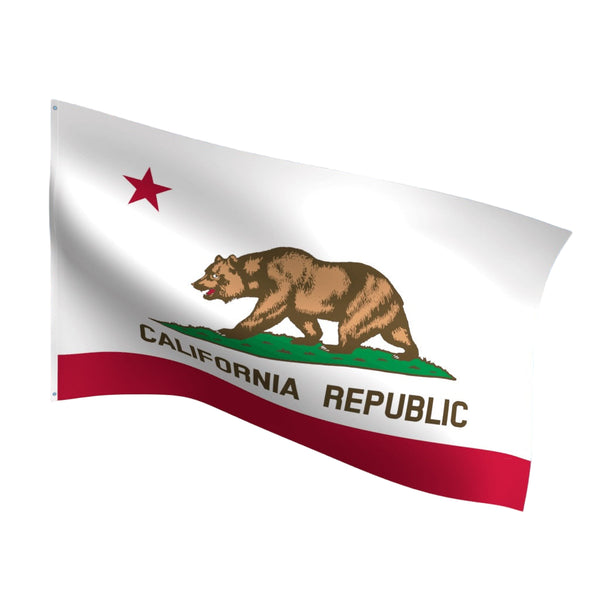
Choosing the right California state flag size is the difference between a display that looks sharp and respectful… and one that looks cramped, oversized, or even puts too much strain on your flagpole. Whether you’re flying the Bear Flag at a coastal home, outside a business in Los Angeles, at a Central Valley farm, or in front of a school or government building, the flag and pole need to be in proportion — especially in a state known for strong sun, coastal winds, and seasonal Santa Ana gusts.
It’s easy to assume that “bigger is better,” but an oversized flag can create excessive wind load, wear out faster, and, in some cases, bend or damage the pole. This guide explains exactly which California flag size works best for house-mount poles, residential in-ground flagpoles, and commercial installations — plus which materials hold up best in California’s diverse climate.
California Flag Size Calculator
Find the perfect California Republic flag size for your display location. Select your installation type below to see our recommendations.
Porch, garage, wall bracket
Most homes, standard flagpoles
Larger homes, small businesses
Commercial properties, offices
Office, school, ceremony display
Recommended California Flag Size
Based on your selection, here's what we recommend:
Quick Answer — Standard California Flag Sizes
If you just need a fast reference, here are the most common California flag sizes and where they’re typically used:
| Display Type | Recommended California Flag Size |
|---|---|
| House-mount pole (porch, garage, wall bracket) | 3' × 5' (or 2' × 3' for compact spaces) |
| Residential in-ground flagpole (15'–20') | 3' × 5' |
| Residential / light commercial in-ground (20'–25') | 4' × 6' |
| Commercial in-ground poles (25'–30') | 5' × 8' |
| Indoor / presentation set | 3' × 5' or 4' × 6' with pole sleeve |
For a national overview, see our Flag Size Chart & Buying Guide.
Choosing the Right California Flag Size for Your Location
House-Mount (Wall-Mounted) California Flags
For most California homes — whether you’re in a coastal neighborhood, a suburban cul-de-sac, or a city street — the classic setup is a 3' × 5' California flag on a 5'–6' house-mount pole. This size looks balanced on one- and two-story homes and provides good visibility from the street without overwhelming your entryway.
- Standard recommendation: 3' × 5' California flag on a 5'–6' pole.
- Smaller spaces: Use a 2' × 3' flag if your porch is tight, you’re close to the sidewalk, or you’re mounting above a small balcony.
- Clearance: Make sure the flag can fly freely without hitting walls, railings, trees, or parked vehicles.
Areas that see coastal winds, canyon gusts, or Santa Ana conditions can put extra stress on wall-mounted hardware. Keeping your house-mounted California flag to a 3' × 5' size helps protect brackets and poles while still delivering a strong visual impact.
Residential In-Ground Flagpoles
For in-ground poles in front of your home, ranch, or small business, use the standard rule: flag length ≈ one-quarter of pole height.
| Pole Height | Ideal California Flag Size | Best For |
|---|---|---|
| 15'–20' | 3' × 5' | Most residential front yards |
| 20'–25' | 4' × 6' | Larger homes, corner lots, wide-open properties |
| 25'–30' | 5' × 8' | Small commercial sites or larger residential estates |
On a typical 20' residential pole, a 3' × 5' California flag will look great and keep wind load in check. If your property sits back from the road or you want extra visibility, you can upgrade to a 4' × 6' — just confirm your pole and hardware are rated for the additional stress, especially in windy regions.
Commercial, Schools & Government Buildings in California
For schools, municipal buildings, churches, and commercial facilities, you’ll commonly see:
- 5' × 8' California flags on 25'–30' poles
- 6' × 10' flags on 30'–35' poles
- 8' × 12' flags on 40' poles and larger
Large flags look impressive in front of campuses, civic centers, and corporate buildings, but they also act like big sails in coastal or valley winds. Always check your flagpole’s wind-load rating and use commercial-grade, Made-in-USA flags and hardware for these installations.
Best Material for the California Climate
From coastal fog and ocean air to inland heat and high UV exposure, California presents a tough environment for outdoor flags. Choosing the right California flag material is just as important as choosing the right size.
Nylon California Flags — Most Popular Everyday Choice
Nylon is a great all-around option for most California locations:
- Flies easily in light to moderate winds.
- Dries quickly after marine layer moisture or rain.
- Bright, crisp colors that stand out in sun and overcast conditions.
If you’re flying the California flag at a typical home or small business and want a balance of durability, color, and movement, nylon is usually the best starting point.
Polyester California Flags — Best for High-Wind & Harsh Conditions
In more demanding environments — coastal headlands, ridge tops, open agricultural land, or areas that experience Santa Ana conditions — a 2-ply polyester California flag is often the better investment:
- Heavier, stronger weave stands up to constant wind and whipping.
- More resistant to tearing at the fly end.
- Ideal for commercial properties, large campuses, and exposed residential sites.
Polyester requires more wind to fly than nylon, but in tough conditions it typically outlasts nylon and holds its shape better over time.
California State Flag Material Guide- Which material is best for your location in California?
If you’re deciding between fabrics, understanding how long California state flags last outdoors can help you choose the right material for your environment.
Indoor California Flags — Indoor & Ceremonial
Indoor California flags with gold fringe are best used for:
- Indoor offices and conference rooms
- Presentation and ceremonial sets
- Short-term indoor or protected displays
Cotton absorbs moisture and can fade more quickly in strong sun, so it isn’t recommended for long-term outdoor display in California’s bright, UV-heavy climate.
Ready to pick the best combination for your location? Browse our California State Flags — Nylon, Polyester & Indoor Sets, all proudly Made in the USA.
Flying the American Flag with the California Flag
When you fly the U.S. and California flags together, follow standard U.S. flag etiquette:
- The U.S. flag always flies in the position of honor — at the top of the pole or on its own right (observer’s left) when displayed side-by-side.
- If both are on the same pole, the California flag should be the same size or slightly smaller than the U.S. flag.
- If you fly additional flags (e.g., a POW/MIA flag or a city flag), the U.S. flag should remain at the highest point.
On a standard residential pole, a 3' × 5' American flag with a 3' × 5' California flag underneath creates a clean, respectful display.
How to Care for Your California Flag (Cleaning, Storage & Lifespan)
Sun, salt air, dust, and wind can shorten the life of any outdoor flag in California. A simple maintenance routine will help your California flag last longer and look better.
Cleaning Nylon & Polyester California Flags
- Wash gently in cold water (hand-wash or gentle machine cycle).
- Use a mild detergent only — avoid bleach and harsh cleaners.
- Rinse thoroughly to remove all soap.
- Air-dry by hanging or laying flat; do not put the flag in a dryer.
For more detailed care, see our guide: How to Clean and Care for Outdoor Flags.
Protecting Your Flag from California Weather
- Bring the flag down during extreme wind events, strong storms, or wildfire-related high-wind advisories.
- Rotate between two California flags so each gets rest time and less wear.
- Inspect the fly end regularly and trim minor frays before they turn into large tears.
Proper Storage for Your California Flag
- For short-term storage, fold the flag neatly (a triangular military fold is ideal).
- For long-term storage, keep the flag flat if possible to avoid deep creases.
- Use a breathable storage bag or container.
- Store in a cool, dry, dark place away from direct sunlight and moisture.
For full storage etiquette, see: How to Store a Flag Respectfully.
When to Replace or Retire a California Flag
Eventually, every outdoor California flag will show enough wear that it deserves a respectful retirement. It’s time to replace or retire your flag when you notice:
- Significant fading, especially in the red bar and brown bear.
- Frayed or shredded threads along the fly end.
- Tears around the grommets or header.
- Very thin, worn fabric that’s starting to appear see-through.
Worn flags shouldn’t just be thrown away. Many American Legion, VFW, and civic groups in California hold flag retirement ceremonies where flags are respectfully disposed of according to tradition.
FAQs — California Flag Size & Display
What size California flag is best for a house?
For most homes, a 3' × 5' California flag on a 5'–6' house-mount pole or a 15'–20' in-ground pole is the standard and best-looking choice.
What size California flag should I use on a 20-foot pole?
A 3' × 5' California flag works very well on a 20' pole. If your property is large or set back from the road, you can upgrade to a 4' × 6', as long as your flagpole and hardware are rated for the additional wind load.
Can I fly the California flag indoors?
Yes. For indoor presentation sets, a 3' × 5' or 4' × 6' indoor/pole-sleeve California flag with optional gold fringe is standard for offices, schools, churches, and government chambers.
Which material lasts longest in California weather?
For most residential displays, nylon performs very well because it flies easily and dries quickly. In very windy or exposed locations — especially coastal or high-elevation sites — a heavy-duty 2-ply polyester California flag usually offers the best long-term durability.
Can I fly the California flag with the U.S. flag on the same pole?
Yes. The U.S. flag must always be at the top in the position of honor, with the California flag flown beneath it. The California flag should be the same size or slightly smaller than the U.S. flag for a proper, respectful display.
Buy Made-in-USA California Flags
Ready to choose the right size and material for your California flag display? At Tidmore Flags, we proudly offer a full range of Made-in-USA California state flags in nylon, polyester, indoor, and outdoor styles.
Since 1963, our family has helped customers across the country choose the right flags, poles, and hardware for long-lasting displays. If you’re still unsure what size California flag you need, contact our flag experts — we’re happy to help you get it right.