American Flags — Find the Right Flag for Your Pole, Property, and Conditions
Not sure what size flag you need?
Enter your pole height and get an instant recommendation.
-
American Polyester Flag
Regular price From $51.95 USDRegular price -
American Nylon Flag
Regular price From $23.00 USDRegular price -
America's 250th Anniversary Outdoor Nylon Flag
Regular price From $34.95 USDRegular price$129.95 USDSale price From $34.95 USDSale -
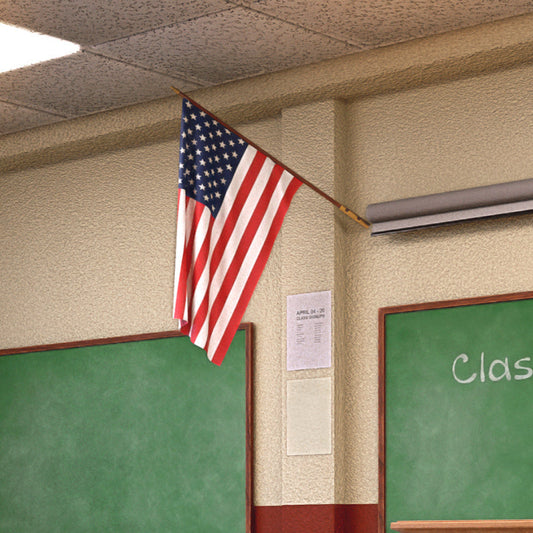
American Mounted Classroom Flag
Regular price From $7.95 USDRegular price -
American Nylon Outdoor Aluminum Flagpole Kit
Regular price $89.95 USDRegular price -
US Presentation Set – American Flag with Pole Hem & Fringe
Regular price From $345.95 USDRegular price -
America 250 Anniversary Flag – White Poly-Cotton (Indoor Display)
Regular price $19.95 USDRegular price -
US Presentation Set – American Flag with Pole Hem (No Fringe)
Regular price From $299.95 USDRegular price -
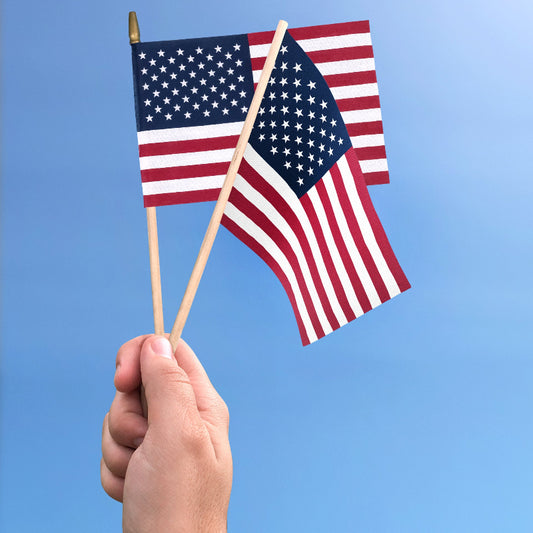
U.S. Stick Flags – 100% Cotton Hand-Held American Flags
Regular price From $1.69 USDRegular price$0.00 USDSale price From $1.69 USD -
American Nylon Flag – Pole Sleeve with Fringe
Regular price From $74.95 USDRegular price -
American Nylon Flag – Pole Sleeve
Regular price From $34.95 USDRegular price -
American G-SPEC Flag – Government Specification
Regular price $148.95 USDRegular price



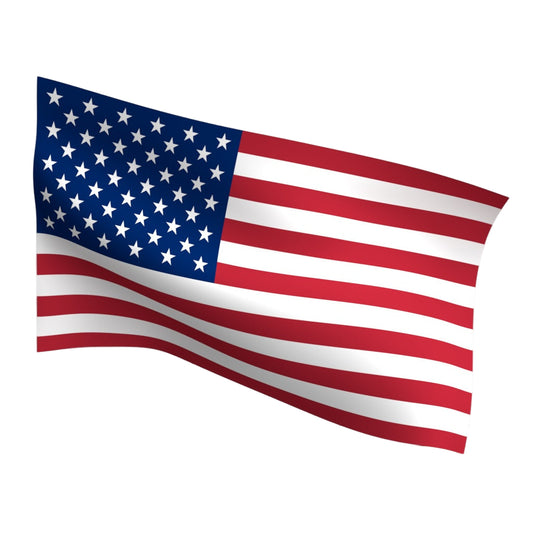
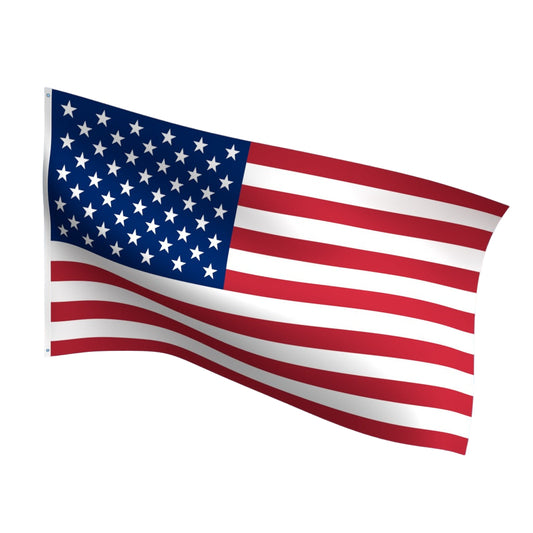
American Flags — Find the Right Flag for Your Pole, Property, and Conditions
Flag Details
American Flags — Find the Right Flag for Your Pole, Property, and Conditions Flags
Frequently Asked Questions
Common questions about the American Flags — Find the Right Flag for Your Pole, Property, and Conditions state flag — including history, display rules, sizing, and where to buy.
Yes. Every American flag sold by Tidmore Flags is 100% manufactured in the United States using U.S.-sourced materials. Every flag carries a serialized FMAA certification seal verifying genuine domestic production. We have been selling American-made flags since 1963.
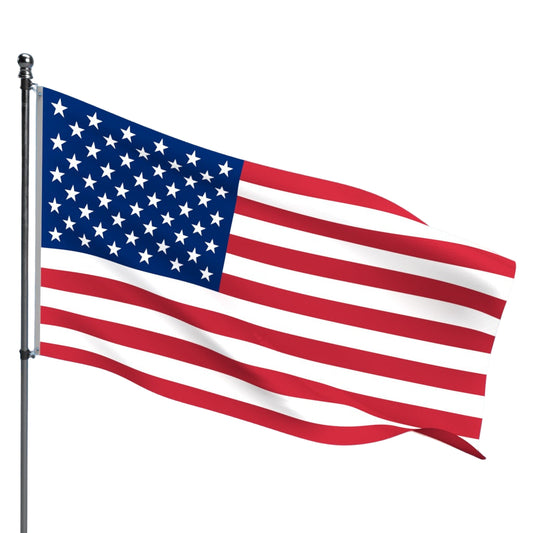
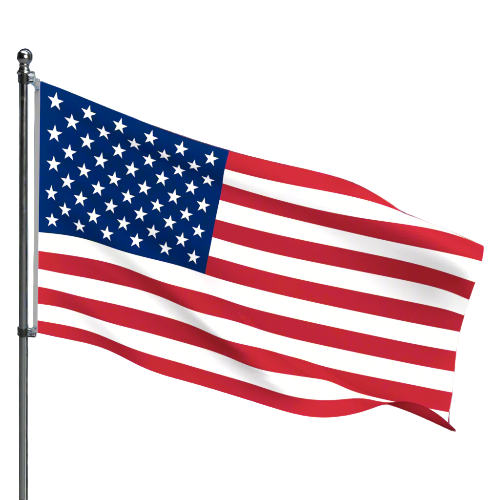
For most homes, our outdoor nylon American flag is the right choice. It is lightweight, flies in a light breeze, dries quickly after rain, and holds color well through a full season of daily flying. For coastal properties, open fields, or high-wind locations, our heavy-duty 2-ply polyester flag is the better long-term investment.
For a standard house bracket with a 5 to 6 ft wall-mount pole, a 3x5 flag is correct for most homes. For a 20 ft in-ground residential pole, a 3x5 is standard. For a 25 ft pole, a 4x6 provides more visual presence. For commercial poles at 30 to 35 ft, a 5x8 is the standard size.
Nylon is lighter, flies in a light breeze, dries fast, and is the right choice for most homes and standard commercial properties. Polyester is heavier and more abrasion-resistant, built for high-wind, coastal, and commercial locations where nylon wears out too quickly. Both materials are available in our collection and both are 100% Made in the USA.
An indoor American flag is finished with a pole sleeve rather than grommets, designed to slide onto an indoor display pole. Indoor flags are used in offices, classrooms, courtrooms, churches, auditoriums, and ceremonies. For a formal ceremonial setting, choose our indoor flag with gold fringe, which is the standard for courtrooms, government offices, and military settings.
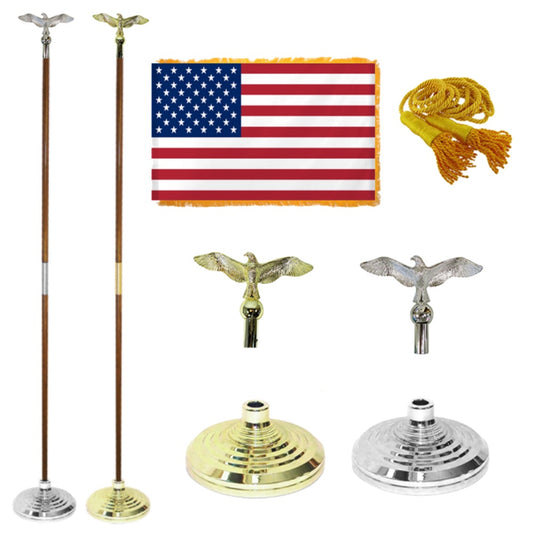
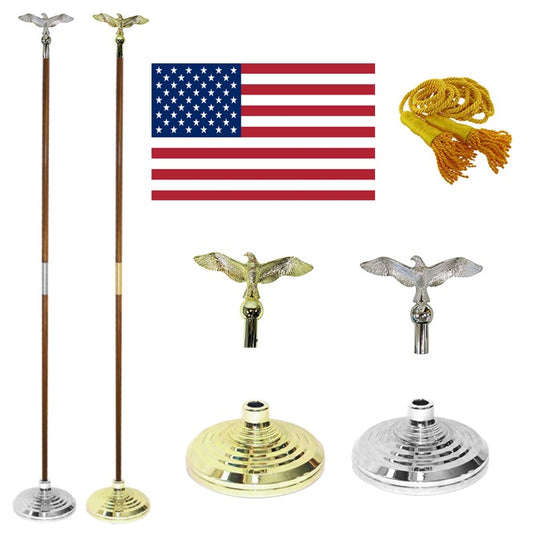
A complete indoor presentation set includes a nylon American flag with pole sleeve, a two-piece hardwood pole, a weighted floor stand, a finial ornament, and gold cord and tassels. Sets are available with or without gold fringe and in multiple heights to match your ceiling. No tools are required for assembly.
In typical residential conditions with moderate wind and full sun, a nylon flag lasts approximately 3 to 6 months of daily flying. In calmer, more sheltered locations it often lasts longer. In coastal or high-wind areas, polyester will outlast nylon significantly. Bringing the flag in during storms and washing it periodically extends its life.
FMAA certification is issued by the Flag Manufacturers Association of America and verifies that a flag was manufactured in the United States using U.S.-sourced materials and meets quality and dimensional standards. The certification is serialized — each seal carries a unique ID tied to the specific manufacturer — making it traceable and verifiable. Every Tidmore Flags American flag carries this certification.
Yes. We offer volume pricing, purchase orders, and tax-exempt purchasing for schools, government buildings, military installations, municipalities, hotels, and businesses. Contact us at 800-321-3524 for bulk quotes, lead times, and sizing recommendations for your specific application.
A G-SPEC flag meets the U.S. government specification for official flag procurement — Federal Specification DDD-F-416. It is constructed from heavyweight cotton bunting with sewn and embroidered stars, reinforced headers, and specific dimensional tolerances required for government use. G-SPEC flags are used for official ceremonies, military installations, memorial services, and casket draping at veteran funerals.
Helpful Guides
Related Flag Collections
Need More Help?