North Carolina State Flags
Not sure what size flag you need?
Enter your pole height and get an instant recommendation.
-
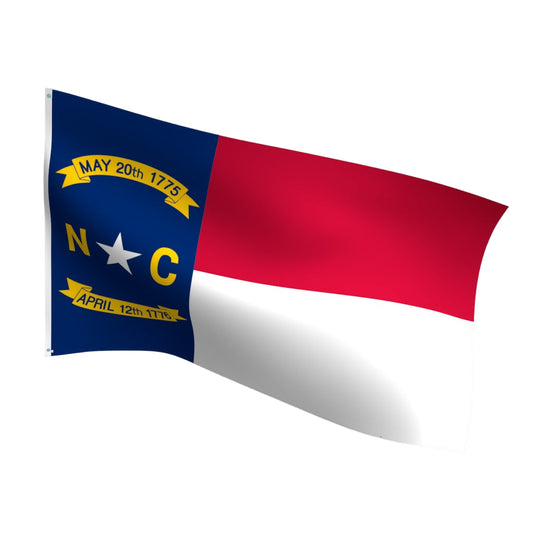
North Carolina Nylon Flag
Regular price From $21.50 USDRegular price$98.25 USDSale price From $21.50 USDSale -
American Flag + North Carolina Flag Nylon Bundle
Regular price From $75.95 USDRegular price -
North Carolina Polyester Flag
Regular price From $84.95 USDRegular price -
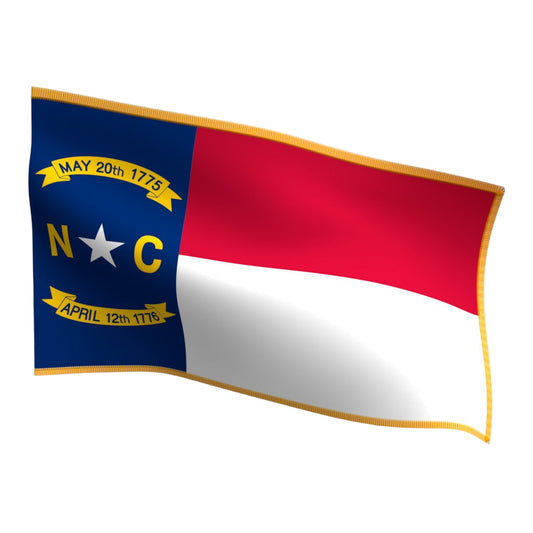
North Carolina Indoor Flag with Pole Hem & Gold Fringe
Regular price From $92.50 USDRegular price -
American Flag + North Carolina Polyester Flag Bundle
Regular price From $135.95 USDRegular price -
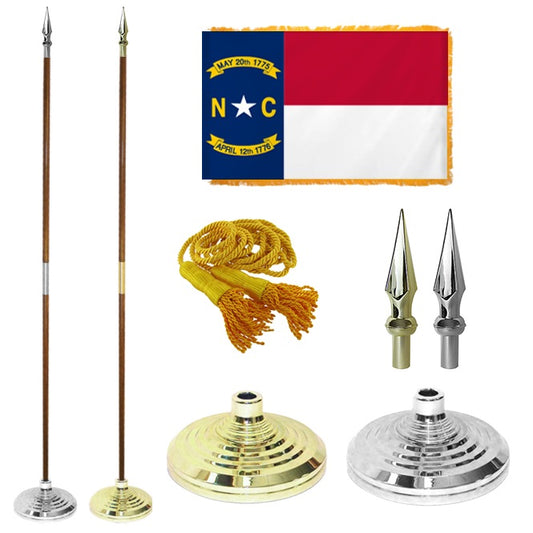
North Carolina Presentation Set
Regular price From $294.95 USDRegular price


North Carolina State Flags
Flag Details
North Carolina State Flags Flags
Frequently Asked Questions
Common questions about the North Carolina State Flags state flag — including history, display rules, sizing, and where to buy.
Tidmore Flags carries authentic, US-made North Carolina state flags in nylon and polyester, available in multiple sizes for homes, businesses, and institutions.
For a 20-foot pole, a 3x5 ft flag is standard. For a 25-foot pole, go with 4x6 ft. For 30-35 feet, use 5x8 ft. North Carolina's Outer Banks and Atlantic coast experience some of the strongest coastal winds in the eastern US — size correctly and use quality marine-grade hardware in coastal locations.
Nylon is the best all-around choice for most of North Carolina. For the Outer Banks, Crystal Coast, and other Atlantic coastal areas where consistent salt air, strong sea breezes, and hurricane-season storms are a factor, a heavy-duty polyester flag is significantly more durable.
A quality nylon North Carolina flag flown daily typically lasts 6 to 12 months. On the Outer Banks and Coastal Plain where salt air and hurricane-season winds are severe, expect 4 to 8 months even from a quality flag. Bringing the flag in during tropical weather events is essential in coastal North Carolina.
Yes, but the US flag must always fly on top when both are on the same pole. On separate poles of equal height, they can fly at the same level with the US flag to its own right (observer's left) and both flags the same size.
A sewn North Carolina flag is the better investment. The NC flag's lettering, dates, and star are best rendered with embroidered or appliqued construction for maximum durability — particularly important in coastal North Carolina's demanding salt air and wind environment.
May 20, 1775 refers to the Mecklenburg Declaration of Independence, when citizens of Mecklenburg County reportedly declared independence from Britain. April 12, 1776 refers to the Halifax Resolves, when North Carolina became the first colony to formally authorize its delegates to vote for independence from Britain.
For Outer Banks and coastal North Carolina, marine-grade stainless steel hardware is essential. The Outer Banks is one of the saltiest environments on the East Coast. Use stainless steel snap hooks, a marine-grade halyard rope, and an anodized aluminum or stainless pole. Rinse all hardware regularly with fresh water.
For indoor ceremonial display, use a pole sleeve flag on an 8-foot pole with a base and ornament. Gold fringe is the traditional finish. North Carolina's red, white, and blue flag with its historical dates looks sharp in formal settings like courtrooms, schools, and government buildings.
Retire your worn North Carolina flag by burning in a dignified ceremony. North Carolina VFW posts, American Legion chapters, and fire departments hold regular flag retirement ceremonies throughout the state.
Helpful Guides
Related Flag Collections
Need More Help?