Marine Corps Flag Materials: Nylon, Polyester & Cotton Compared
Share
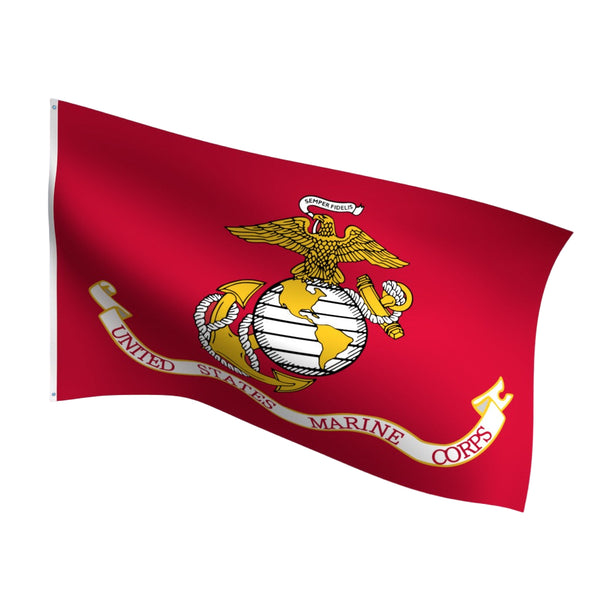
The scarlet Marine Corps flag is already powerful on its own.
But here’s a secret most people never think about:
What that flag is made of changes how it flies, how long it lasts, and how it looks every single day.
Same design. Same Eagle, Globe & Anchor.
Totally different experience if you choose nylon, polyester, or cotton.
If you’re flying a USMC flag at home, on a boat, at a business, or inside a VFW hall, the material you pick is the difference between a flag that looks sharp for years… and one that frays, fades, and sags long before it should.
This guide from TidmoreFlags.com walks you through everything you need to know about Marine Corps flag materials—nylon, polyester, and cotton—so you can match the right fabric to your climate, your display, and your budget.
And along the way, ask yourself:
Where do you want your Marine Corps flag to fly—and what story do you want it to tell?
A Marine Comes Home: Why Material Matters More Than You Think
Let’s start with a quick story.
A Marine just comes home from deployment. Family and friends gather in the driveway. There’s a brand-new USMC flag ready to go up under Old Glory on the house-mounted pole.
They bought it because it “looked nice” online. They didn’t think to check the material.
The first week, it looks perfect—bright scarlet, crisp Eagle, Globe & Anchor, flying proudly in every breeze.
But the house sits on a hill that catches every bit of wind. By the end of the season, the edges are frayed, the red looks tired, and the flag is starting to tear along the fly end.
Nothing “wrong” with the flag. It just wasn’t the right fabric for that location.
Same story plays out:
- On boats with cheap, heavy fabric that never flies right.
- On downtown businesses where sun and wind chew through the wrong material.
- At homes where a beautiful cotton flag is left outside in constant rain.
The fix isn’t more flags—it’s the right flag material for the job.
The Three Main Marine Corps Flag Materials: Nylon, Polyester & Cotton
At Tidmore Flags, we focus on three core materials for Marine Corps flags:
- Nylon – Best all-around, lightweight, vibrant, and great for most homes.
- Polyester – Heavy-duty workhorse for harsh, windy, or coastal environments.
- Cotton – Traditional, ceremonial fabric for indoor or short-term display.
Each has its strengths and tradeoffs. Let’s break them down.
Nylon Marine Corps Flags: Best Lightweight Material for Everyday Use
If you’re looking for a “default” Marine Corps flag material that works well in most situations, nylon is it.
Why Nylon Works So Well
Nylon is a synthetic fabric that’s:
- Lightweight – Flies in lighter breezes, so your USMC flag actually moves instead of hanging limp.
- Quick-drying – Naturally repels water and dries quickly after rain, which helps reduce mildew and fabric breakdown.
- Colorfast – Holds dye extremely well, so scarlet stays scarlet and the gold in the emblem remains bright.
- UV-resistant – Resists fading in the sun better than cotton, and often better than cheaper poly blends.
- Affordable – Typically less expensive than heavy-duty polyester, making it ideal for homeowners.
For Marine Corps flags, a 200-denier nylon is often considered the sweet spot. It’s dense enough to be durable, but still light enough to fly beautifully.
If you’ve ever driven by a house and seen a USMC flag that’s snapping crisply in a mild breeze and glowing in the sunlight—that’s usually nylon.
When Nylon Marine Corps Flags Are the Best Choice
Nylon is ideal if:
- You’re in a moderate wind area (not constantly extreme).
- You want your flag to fly easily in a light breeze.
- The flag will be flown on a house-mounted pole, porch, balcony, or small yard pole.
- You prefer a bright, vivid look with strong color and a bit of sheen.
- You want a good balance of cost and longevity.
When Nylon Might Not Be Enough
Nylon’s main weakness is extreme wind and harsh weather:
- In very high-wind locations, nylon can fray faster than polyester.
- On exposed ridges, coastal headlands, or large open fields, constant stress can shorten its lifespan.
If your Marine Corps flag is going to face relentless wind, it’s time to look at polyester.
Polyester Marine Corps Flags: Heavy-Duty Flags for Harsh Conditions
Think of polyester as the “combat-ready” option of flag fabrics.
It’s heavier, tougher, and built to survive where other materials give up.
Why Polyester Is So Durable
Polyester flags are:
- Extremely strong – Excellent tensile strength; they resist tearing and stretching.
- Highly weather-resistant – Stand up to high winds, heavy rain, and strong sun better than almost anything else.
- Abrasion-resistant – Less likely to wear thin at the fly end in constant motion.
- Non-absorbent – Don’t soak up water the way cotton does.
For high-wind sites—open fields, hilltops, coastal towns, exposed business locations—polyester is often the best Marine Corps flag material.
When Polyester Marine Flags Are the Best Choice
Choose polyester if:
- You live in a coastal or high-wind area.
- Your flag pole is in an open, exposed location (commercial property, rural acreage, tall freestanding pole).
- You want a long-term, heavy-duty outdoor USMC flag.
- You understand you’ll need a bit more wind to get it fully flying—but in strong gusts, it will shine.
- You’re prioritizing maximum durability over ultra-bright sheen.
Tradeoffs of Polyester
Polyester has a few drawbacks:
- It’s heavier, so it won’t move as much in very light breeze.
- It’s typically more expensive than nylon due to the thicker fabric and construction.
- Its colors, while solid, can appear a bit more matte or subdued than ultra-bright nylon.
If your number one goal is longevity in hard conditions, polyester is hard to beat. If you care more about light wind performance and vivid color, nylon still wins.
Cotton Marine Corps Flags: Traditional, Ceremonial & Indoor Displays
Cotton is where tradition lives.
Walk into a historic building, a courtroom, or a ceremonial hall, and there’s a good chance the flag is cotton.
Why People Love Cotton Flags
Cotton offers:
- A classic, matte look that feels historic and dignified.
- Beautiful drape—cotton hangs and folds in a way synthetics just can’t match.
- A natural fiber, biodegradable and traditional.
- A “soft” visual quality that makes it ideal for display in:
- Indoor ceremonies
- Casket flags
- Folded flags in display cases
- Historic or reenactment settings
For a formal indoor Marine Corps display, a cotton or cotton-blend flag can look absolutely stunning.
Where Cotton Falls Short for Marine Flags
Cotton has significant limitations outdoors:
- It absorbs moisture easily—rain, dew, humidity.
- Prone to mildew, rot, and sun damage if left outside.
- Wears faster than nylon or polyester in wind and weather.
Cotton is best for:
- Indoor displays
- Short-term outdoor ceremonies
- Folded flags or shadow box displays
If you want your USMC flag outside year-round, nylon or polyester will give you far better value and longevity.
Story Time: Three Houses, Three Marine Corps Flags
Picture three neighbors on the same street. All three families have a connection to the Marine Corps, and all three fly the USMC flag—just made from different materials.
House #1 – Nylon Marine Corps Flag
- Location: Suburban neighborhood, moderate wind, some trees.
- Flag: 3x5 nylon Marine Corps flag under a 3x5 U.S. flag on a 20' pole.
Result:
The USMC flag snaps to attention in light breeze, dries quickly after rain, and keeps a vibrant scarlet color through spring, summer, and fall. After plenty of use, it eventually starts fraying a bit at the fly end—but only after a solid run of daily display.
House #2 – Polyester Marine Corps Flag
- Location: Hilltop property with almost constant wind.
- Flag: 4x6 heavy-duty polyester Marine Corps flag on a freestanding pole.
Result:
In gentler winds, the flag doesn’t move as much—but when the wind picks up, it looks powerful and solid. While nylon flags up the road are starting to shred, the polyester USMC flag is still holding strong. It was more expensive up front, but it avoids multiple replacements over the year.
House #3 – Cotton Marine Corps Flag
- Location: Townhouse with an indoor display in the living room.
- Flag: Cotton Marine Corps flag in a wooden stand next to a display case with medals and a folded U.S. flag.
Result:
No rain, no wind—just controlled indoor lighting. The cotton flag drapes beautifully beside the memory display. Its traditional look fits the tone: quiet honor, reflection, and pride.
Same emblem. Same Corps. Three totally different use-cases, three different best materials.
Which one feels closest to your situation?
Quick Comparison: Best Material for Your Marine Corps Flag
Here’s a simple list to help you choose:
Choose NYLON Marine Corps flags if…
- You want a great all-around flag.
- Your site has light to moderate winds.
- You prefer bright, vivid colors and a flag that flies in a light breeze.
- You’re flying from a house-mounted pole, porch, or small yard pole.
- You want good performance at a friendly price.
Choose POLYESTER Marine Corps flags if…
- You live in a high-wind or coastal area.
- You’re flying your flag daily, year-round outdoors.
- You need a heavy-duty flag that can take a beating.
- You’re okay with a heavier fabric that needs more wind to move.
- You’re prioritizing maximum durability over ultra-bright sheen.
Choose COTTON Marine Corps flags if…
- You’re displaying the flag indoors.
- You need a flag for ceremony, memorial, or historic reenactment.
- You love the traditional look and drape of natural fibers.
- You’re okay keeping it out of rain and long-term direct weather.
FAQ: Marine Corps Flag Materials & Care
1. What is the best material for a Marine Corps flag at home?
For most homes, nylon is the best choice. It flies easily in light winds, looks vibrant, dries quickly, and offers a great balance of price and durability on house-mounted or small yard poles.
If your house sits on an exposed hill or you constantly get strong wind, polyester may be better.
2. What’s the best material for a Marine Corps flag in high wind?
Polyester is typically the best Marine Corps flag material for high-wind or coastal locations. Its heavier, stronger weave resists tearing and fraying better than nylon when subjected to constant wind and harsh weather.
3. Is cotton a bad choice for outdoor Marine Corps flags?
Not bad—just limited. Cotton can be used outdoors for short-term events or special occasions, but it’s not ideal for long-term outdoor display. It absorbs water, mildews more easily, and breaks down faster in sun and wind than nylon or polyester.
If you love the look of cotton, consider using it indoors and pairing it with a nylon or polyester flag outdoors.
4. What material is best for a Marine Corps flag on a boat?
For a boat flag, you want a material that:
- Flies in wind
- Dries quickly
- Resists UV, salt, and moisture
That usually means nylon is the best fit for smaller boat USMC flags: lightweight, quick-drying, and colorfast. In very harsh marine environments with constant, heavy wind, a smaller polyester flag can be a solid choice—but nylon is usually the best blend of performance and appearance for most boats.
5. How do I make my Marine Corps flag last longer, regardless of material?
A few simple habits go a long way:
- Take flags down during severe storms.
- Avoid letting the flag whip against rough surfaces like shingles or metal edges.
- Check for early fraying at the fly end and retire or repair before it tears deeply.
- Keep cotton flags indoors or limit them to short-term outdoor use.
- Consider having a “good-weather flag” and a “everyday workhorse flag” if you fly them constantly.
So… Which Marine Corps Flag Material Is Right for You?
At the end of the day, the “best” Marine Corps flag material isn’t the same for everyone.
It depends on:
- Where you fly it
- How long you leave it up
- How strong your wind is
- What look you prefer
- How much care you’re willing to give it
If you want a quick rule of thumb:
- Nylon – Best for most homes & everyday use.
- Polyester – Best for harsh weather & high-wind, heavy-duty outdoor display.
- Cotton – Best for indoor, ceremonial, and traditional displays.
Ready to Choose Your Marine Corps Flag the Smart Way?
If you’re flying the Eagle, Globe & Anchor, you’re not just hanging fabric—you’re honoring a legacy.
At Tidmore Flags, we offer:
- Nylon Marine Corps flags that fly beautifully and stay vibrant.
- Heavy-duty polyester Marine Corps flags built for rough weather and constant outdoor duty.
- Traditional indoor and ceremonial flags for displays, memorials, and special occasions.
- All available in Made in USA options to match the pride behind the flag.
Shop Marine Corps flags now:
Head to the Marine Corps Flags collection at TidmoreFlags.com and choose the material that fits your home, your climate, and your story.
Fly it proudly— and fly it in the material that’s built for your mission.